Uncategorized
What Is Minimally Invasive Body Contouring?
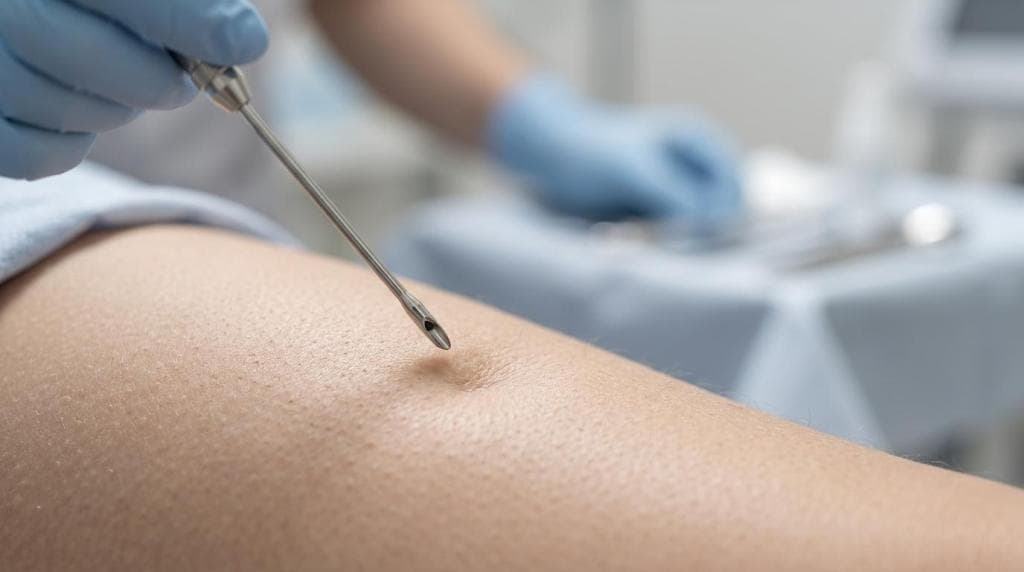
Minimally invasive body contouring is a middle category of aesthetic treatment that reshapes specific areas through small access points under the skin. It is not the same as FDA-defined noninvasive contouring, and it is usually less extensive than full surgical body contouring.
TL;DR: Summary
- Minimally invasive body contouring refers to body-shaping procedures that use small incisions, cannulas, probes, or subcision tools to treat tissue under the skin. It sits between noninvasive body contouring and more extensive surgery like traditional liposuction or skin-removal procedures.
- The main advantage is a stronger, more targeted contour change than external devices alone, often with shorter recovery and less procedural burden than full surgery.
- The main trade-off is real procedural risk. Clinical and official sources repeatedly flag contour irregularities, uneven fat removal, medication safety, clot risk assessment, and tissue injury as issues that must be planned for carefully.
- Not all body contouring does the same job. Fat-removal procedures target subcutaneous adipose tissue, while cellulite-focused subcision releases fibrous septal bands to improve skin topography rather than reduce body size.
- Good candidates are usually adults near a stable weight who want localized shaping, not major weight loss. If the main issue is severe skin laxity or a need for large-volume change, a more surgical plan may be more appropriate.
- Provider selection matters. Ask how the treatment works, what risks are most relevant, whether DVT screening tools like the Caprini score are used when appropriate, and how the clinician reduces the chance of contour irregularities.
For many adults, the appeal is straightforward: more visible shaping than an external device, with less disruption than full surgery. The decision still deserves clinical rigor, because once a procedure enters the skin or removes tissue, the standards for safety, technique, and patient selection rise quickly.
What does minimally invasive body contouring actually mean?
Minimally invasive body contouring sits between FDA-defined noninvasive devices and surgical reshaping. It changes targeted tissue through small entry points, internal probes, cannulas, or band-release tools, usually with less downtime than full surgery and more direct tissue change than external treatments.
If a treatment works only from outside the skin and does not remove fat or skin, the FDA classifies it as noninvasive body contouring. If the treatment passes under the skin with a cannula, subcision device, or internal energy applicator, it moves into minimally invasive territory.
That distinction matters because the benefit and the risk profile both change. Minimally invasive methods can reduce localized subcutaneous adipose tissue or release tethering under the skin, but they also introduce procedural concerns, including bruising, swelling, contour irregularities, and tissue injury if treatment depth is poorly controlled.
“Tullia is described as a 15-minute full-body, in-office treatment with no general anesthesia and immediate return to normal activity.”
A common misconception is that all body contouring means fat removal. Some treatments that are grouped under body contouring, especially cellulite procedures, focus more on surface smoothing than on changing body size.
How is minimally invasive body contouring different from noninvasive body contouring?
The FDA draws a clear line: noninvasive body contouring does not remove tissue, while minimally invasive methods treat tissue beneath the skin. That usually means more direct reshaping potential, along with more meaningful procedural risk.
Noninvasive options appeal to people who want no incisions and the lowest disruption to routine. They are often chosen for mild to moderate concerns, especially when someone prefers gradual change and accepts that multiple sessions may be needed.
Minimally invasive options are usually considered when a person wants a more targeted change in a stubborn area and is comfortable with local anesthesia, small access points, and a closer recovery plan. If your priority is the lightest possible intervention, noninvasive treatment often makes more sense. If your priority is stronger contour change in a defined pocket, minimally invasive treatment may be the better fit.
A practical rule is not to treat “non-surgical” and “minimally invasive” as synonyms. They overlap in casual marketing language, but medically they are not identical.
What are the main minimally invasive body contouring options?
The main options include small-incision fat reduction, energy-assisted tissue remodeling, and cellulite-focused subcision. The right choice depends on whether the problem is volume, skin support, cellulite tethering, or a mix of all three.
Most treatment plans start by identifying the target tissue. If the issue is a discrete fat pocket, the approach differs from a plan for dimpling caused by fibrous septal bands.
- Tullia: An in-office minimally invasive body contouring procedure developed by Dr. Martin Moskovitz. It is positioned as a fast treatment option for fat reduction and sculpting without general anesthesia.
- Tumescent liposuction: A fat-removal technique that uses cannulas and vacuum suction to remove subcutaneous adipose tissue through small incisions.
- Laser-assisted lipolysis: A method that uses internal laser energy to disrupt fat and may add some skin-tightening effect, with heat management as a key technical issue.
- Radiofrequency-assisted body contouring: An internal energy-based approach designed to reduce fat and contract tissue, often selected when contouring and skin support are both part of the goal.
- Cellulite subcision: A minimally invasive method that releases tethering bands under the skin to smooth dimpling and improve skin topography.
This is where precision matters. Two people can both say they want “body contouring” while one needs fat reduction and the other needs band release, and those are not the same treatment problem.
How does a minimally invasive body contouring appointment usually work?
A typical appointment follows three steps: mapping, treatment, and recovery guidance. In-office systems and small-area procedures often use local or tumescent anesthesia rather than general anesthesia.
Step 1 is assessment and marking. The clinician examines the standing contour, pinch thickness, skin elasticity, asymmetry, and whether the concern is fat volume, laxity, or cellulite tethering. Step 2 is the treatment itself, which may involve infiltration of local anesthetic, internal fat treatment, suction, or subcision through small entry points.
Some practices keep the process entirely office-based, which changes the recovery experience compared with operating-room surgery. That can be attractive, but it should not be confused with “risk free,” because technique still determines how smooth and predictable the result will be.
“Tullia can treat multiple areas in one visit and does not require special post-op care.”
Step 3 is aftercare and follow-up. Depending on the method, instructions may include compression, walking, temporary activity limits, hydration, and check-ins to track swelling and contour maturation. A useful question to ask is when the result is expected to look final, not just when you can return to work.
Who is a good candidate for minimally invasive body contouring?
Good candidates are usually healthy adults near a stable weight with localized contour concerns. The best results tend to come when the goal is sculpting, not major weight loss.
If a person has a stubborn lower-abdomen pocket, flank fullness, inner-thigh disproportion, or cellulite dimpling, minimally invasive treatment may be reasonable. If the main issue is loose skin after large weight changes, a skin-removal procedure may produce a better shape than fat reduction alone.
Skin quality matters more than many people expect. Uneven elasticity can make even technically successful fat reduction look less smooth. A common misconception is that body contouring can replace nutrition, exercise, or weight management. It usually cannot. It is best viewed as refinement after broader lifestyle factors are already fairly stable.
If weight is still changing quickly, it is often smart to wait. If expectations depend on dropping several clothing sizes, the initial consultation should reset the plan before any procedure happens.
How does minimally invasive body contouring compare with liposuction?
Liposuction and minimally invasive contouring overlap, but they are not always the same decision. StatPearls describes liposuction as a body-contouring procedure that removes subcutaneous adipose tissue with vacuum suction, which places it on the more intervention-heavy end of the contouring spectrum.
In patient decision-making, “liposuction” often means broader fat removal, more swelling, and a higher physiologic load than smaller in-office contouring procedures. That does not mean liposuction is wrong. It means the best choice depends on treatment area, volume, anesthesia plan, and how much correction is needed.
Mayo Clinic notes that liposuction risks include contour irregularities and that serious complications can affect the kidneys, heart, and lungs. Mayo also states that risk rises when larger body surfaces are treated or when multiple procedures are performed during the same operation. That point matters: if the plan is getting bigger and bigger during consultation, the safety discussion should get more detailed, not less.
A helpful way to frame it is this: if you need broad debulking, liposuction may offer the most direct answer. If you need smaller-area sculpting with a lighter recovery plan, a minimally invasive office-based option may be more appropriate.
What risks and complications should you take seriously?
Contour irregularities are one of the most important risks in body contouring. Mayo Clinic and StatPearls both highlight the danger of uneven treatment, and StatPearls warns that overtreatment of the superficial layer can even compromise blood supply to overlying tissue.
The safest way to evaluate any option is to look beyond downtime claims and ask what can go wrong, how those risks are reduced, and how problems would be managed if they occur.
- Contour irregularities: Uneven fat removal can leave skin bumpy, wavy, or withered, especially when elasticity is limited or treatment is too aggressive.
- Surface tissue injury: Treating too superficially can injure the overlying tissue and increase the risk of vascular compromise.
- Systemic complications: Larger treatment fields and combined procedures can increase strain on the heart, lungs, and kidneys.
- Clotting and medication safety: Reputable protocols may include DVT screening with tools like the Caprini score and close attention to lidocaine dosing limits.
A practical tip is to be cautious if risk discussion feels rushed. Fast recovery is valuable, but a provider who cannot clearly explain complication patterns, candidacy limits, and follow-up standards is not simplifying the process. They may be oversimplifying it.
How do cellulite-focused treatments like subcision fit into body contouring?
Subcision fits body contouring when the main problem is cellulite tethering, not excess fat volume. Clinical literature describes it as a technique that releases fibrous septal bands under the skin so the surface can look smoother.
A cellulite review in PMC explains that subcision releases the reticular dermis from tethering by fibrous septal bands within subcutaneous adipose tissue. In plain terms, the treatment cuts the internal bands that pull the skin downward and create dimples.
This is where many treatment decisions go off track. If the visible problem is mostly dimpling, a fat-reduction plan alone may not fix it. If the visible problem is mostly fullness, subcision alone may not slim the area. One treatment addresses skin topography, while the other addresses volume. They can complement each other, but they are not interchangeable.
A common misconception is that cellulite treatment equals body-size reduction. It usually does not.
How should you choose the right provider and treatment plan?
The best provider discussion is specific, anatomical, and honest about trade-offs. Board certification, accredited facilities, and a clear explanation of what tissue is being treated are strong starting points.
Step 1 is verifying qualifications and setting. A board-certified plastic surgeon or similarly qualified specialist should be able to explain why a treatment matches your anatomy, not just your preference. Step 2 is asking exactly what is being corrected: subcutaneous fat, skin laxity, cellulite bands, or a combination. That single question often reveals whether the plan is thoughtful or generic.
“Tullia was developed by Dr. Martin Moskovitz, a double board-certified surgeon with 35+ years’ experience, and is offered in a Quad A accredited surgical facility.”
Step 3 is reviewing the safety workflow. Ask how asymmetry is assessed, how contour irregularities are avoided, whether DVT risk assessment is used when indicated, and what aftercare is expected. If a clinician can show how the technique is adjusted for skin thickness, treatment area, and recovery goals, that is a strong sign the plan is being individualized.
What results and recovery should you realistically expect?
Results are usually gradual, even when recovery is quick. Swelling, firmness, and contour settling can change the appearance for weeks before the treated area looks close to final.
In the first stage, expect the area to look different before it looks better. Some patients return to normal activity rapidly, especially with lighter in-office approaches, but that does not mean the shape is final the same day. Early photos can mislead if swelling is still present.
In the second stage, tissue remodeling becomes more informative. Fat reduction procedures reveal shape over time as swelling drops. Cellulite-focused treatments show value when skin topography looks smoother, not when the scale changes. If a treatment claims instant final sculpting with no swelling at all, skepticism is healthy.
In the third stage, durability depends on what was treated and whether weight stays stable. If fat cells are removed, the improvement can last, but remaining fat cells can still enlarge with future weight gain. If cellulite bands are released, smoothing can be meaningful, though natural aging and tissue change still continue. The best expectation is not perfection. It is a more proportionate contour that fits the anatomy you started with.
Ready to take the next step?
Request a consultation with Dr. Moskovitz to discuss whether the Tullia procedure is right for you.
Request a Consultation