Uncategorized
Same Day Body Contouring: Who Qualifies?
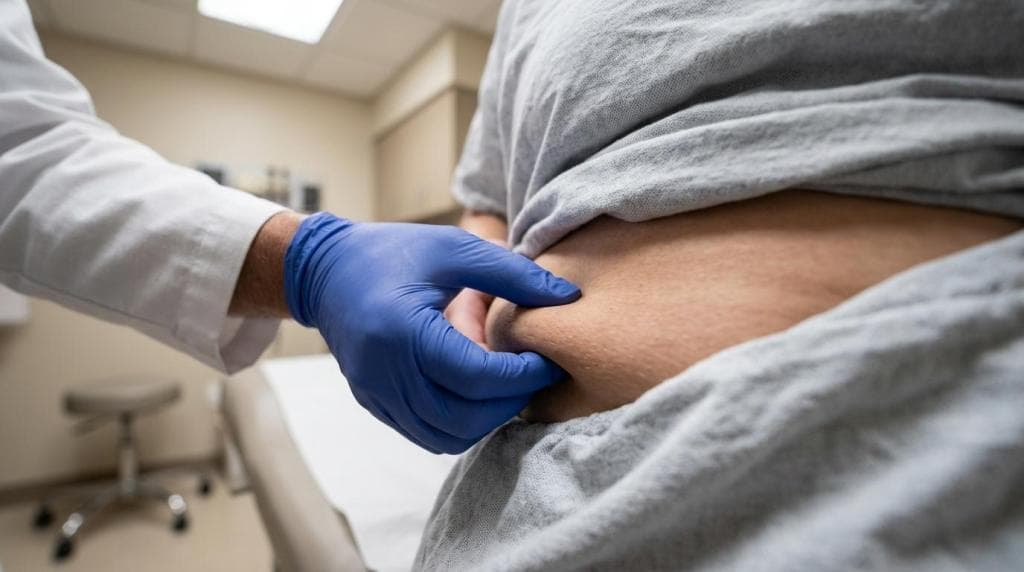
Same day body contouring can be a strong fit for the right patient, but faster treatment does not mean looser screening. The best candidates are usually adults at or near a stable weight, in good health, with localized fat concerns or mild to moderate contour issues that do not require major skin-removal surgery.
TL;DR: Summary
- Same day body contouring is usually best for adults with stable weight, good overall health, realistic goals, and a contouring problem driven mostly by localized fat rather than major excess skin.
- If you are still losing weight, use nicotine, have uncontrolled medical issues, or need excess skin removal after major weight loss, you may not qualify for an in-office same day option and may need to wait or consider surgical body contouring instead.
- Major medical sources including the American Society of Plastic Surgeons, Cleveland Clinic, Johns Hopkins, Ohio State, and Mayo Clinic point to the same core criteria: weight stability, healing capacity, skin quality, and a clear match between the procedure and the anatomy being treated.
- A practical rule is simple: if the issue is mostly fat, minimally invasive same day contouring may fit; if the issue is mostly hanging skin, surgical contouring usually fits better.
- For post-weight-loss body contouring, some programs look for 6 months of stable weight, while others ask for 1 year, so timing varies by practice and procedure type.
That distinction matters because “body contouring” can describe very different procedures. In academic and hospital settings, it often means skin-removal surgery after major weight loss, while in-office same day treatments are more often minimally invasive fat-reduction and sculpting procedures with much shorter recovery.
What does “same day body contouring” actually mean?
Same day body contouring usually means an in-office treatment like Tullia or a limited awake contouring procedure, not a full body lift. The patient goes home the same day and typically avoids general anesthesia, hospital admission, and long recovery protocols.
In practical terms, the phrase describes logistics and recovery more than anatomy. A same day procedure is built around speed, convenience, and lower disruption to daily life, but it still needs proper medical screening. A common misconception is that same day means “lightweight.” It does not. It means the treatment is structured so you can be treated and discharged without a long postoperative course.
Tullia is designed as a 15-minute full-body treatment with no general anesthesia and immediate return to normal activity.
The key question is not whether a procedure sounds convenient. The key question is whether your anatomy matches what the procedure can realistically correct.
Who usually qualifies for same day body contouring?
Good candidates usually look more like Mayo Clinic liposuction candidates than post-bariatric body-lift patients. They are adults in good health, close to a stable weight, with realistic goals and enough skin quality to let the treated area heal into a smoother contour.
The American Society of Plastic Surgeons describes strong body contouring candidates as adults whose weight loss has stabilized, who are healthy nonsmokers, and who maintain realistic goals with ongoing nutrition and fitness habits. Those standards still matter for same day treatment, even when the procedure is less invasive. If your weight is still changing every month, your result is harder to predict.
Weight stability is one of the most useful screening factors because it tells a surgeon whether the contour is likely to hold. Ohio State notes that some teams operate after about 6 months of stable weight, while Cleveland Clinic cites at least 1 year for post-weight-loss surgery. Same day in-office procedures do not always require the same waiting period, but the logic is similar: if your body is still changing, the contour plan may be premature.
Skin quality matters too. Mayo Clinic notes that firmer, more elastic skin tends to look smoother after fat removal. Pro tip: bring a 6 to 12 month weight history, not just your current number. A stable trend often says more than one weigh-in.
How do surgeons screen candidacy before approving a same day procedure?
Candidacy screening is usually a three-part process involving medical risk, tissue exam, and goal matching. Tullia, liposuction, and surgical contouring can all start with the same question: can this person heal well, and does the procedure fit the problem?
Step 1: review your medical history, medications, smoking status, prior surgeries, and clotting risk. This is where issues like uncontrolled diabetes, anticoagulants, poor wound healing, or active nicotine use can change the plan. Johns Hopkins highlights clot risks, including pulmonary embolism, in major body-contouring surgery, and that risk framework still shapes how surgeons think about elective contouring.
Step 2: examine the tissue itself. Surgeons look at where the bulk sits, how much is fat versus skin, whether the skin recoils when lifted, and whether there are folds, rashes, or hanging tissue. If the pinch shows localized adiposity with decent recoil, same day contouring may work. If the problem is draping skin, the answer may shift toward excision rather than sculpting.
Tullia can treat multiple areas in one visit and is designed to target up to 3 to 4 times more tissue per session.
Step 3: match expectations to the method. If you want smaller proportions and smoother lines without a major recovery period, a same day option may fit. If you expect a flat abdomen after massive weight loss with skin hanging below the waistline, the plan may need to change. Common misconception: better technology does not cancel out anatomy.
What same day body contouring options are commonly discussed?
The most common options fall into four buckets: minimally invasive in-office contouring, awake liposuction, noninvasive device treatments, and traditional surgical contouring done as outpatient surgery. They are not interchangeable, even if all are marketed as “body contouring.”
The right option depends on what needs correction, how much tissue is involved, what type of downtime you can accept, and whether skin excision is part of the plan.
- Tullia minimally invasive body contouring: An in-office option developed by Dr. Martin Moskovitz for fat reduction and sculpting without general anesthesia, with multiple areas treated in one visit.
- Awake or local-anesthesia liposuction: Often used for selected areas when a patient wants direct fat removal and accepts bruising, compression, and a more procedural recovery.
- Noninvasive device-based contouring: Treatments like cryolipolysis or radiofrequency can fit patients who want modest change without incisions, though results are typically less dramatic and may take multiple sessions.
- Traditional outpatient surgical contouring: A patient may go home the same day, but the recovery is not “same day” in any meaningful sense. This category fits larger corrections and skin removal.
A useful filter is simple: same day refers to when you leave the facility, not how big the change will be.
How is same day body contouring different from traditional post-weight-loss body contouring surgery?
Traditional post-weight-loss body contouring at Cleveland Clinic or Johns Hopkins is mainly about skin removal. Same day contouring is mainly about fat reduction and shape improvement with less recovery.
That difference is easy to miss because the same phrase gets used for both. In academic and surgical settings, body contouring often means procedures like panniculectomy, lower body lift, thigh lift, or arm lift after major weight loss. Those procedures remove redundant skin and reshape the underlying tissues, but they involve more planning, more healing demands, and more downtime.
Same day contouring is a better fit when the issue is contour, not a large volume of excess skin. If you have an abdominal apron, hanging folds, or repeated skin irritation, surgery may solve the problem more directly. The trade-off is clear: surgical contouring can produce stronger correction of loose skin, but with more risk, more recovery, and often stricter qualification rules.
How is same day body contouring different from liposuction?
Liposuction and same day body contouring overlap, but they are not identical categories. Mayo Clinic makes the core point clearly: liposuction is not a weight-loss method, and it works best when skin tone and elasticity are favorable.
Liposuction is a fat-removal technique. Same day body contouring is a broader treatment category that may include liposuction-style approaches, minimally invasive sculpting, or noninvasive methods. If your main issue is a discrete fat pocket and your skin is likely to shrink smoothly, liposuction may be a direct answer. If your priority is office-based treatment with no general anesthesia and quick return to activity, a minimally invasive same day option may be more attractive.
The trade-off is not just downtime. It is also how much correction you need, how much swelling or bruising you can tolerate, and whether skin tightening is expected to happen on its own. Common misconception: removing more fat always creates a better contour. In reality, too much reduction in weak skin can make irregularity or looseness more obvious.
What if you lost a lot of weight and have loose skin?
After major weight loss, the real issue is often excess skin, not leftover fat. ASPS and Cleveland Clinic both frame body contouring in this setting as a skin-removal problem first.
That means many post-weight-loss patients qualify for surgical contouring, but not for a same day in-office treatment as the main solution. If the skin hangs, folds, traps moisture, or creates hygiene problems, a minimally invasive fat-reduction procedure may leave the most important complaint unchanged. If there is only mild laxity with some residual fat, a same day option can still be reasonable in selected areas.
Tullia was developed by a double board-certified surgeon with 35+ years of experience and is performed in a Quad A accredited surgical facility.
A useful test is this: if you can grab mostly skin rather than a thick fat layer, skin excision may need to be part of the conversation. If the tissue feels full, dense, and localized, contouring may help more.
How should you prepare for a same day body contouring appointment?
Preparation is usually straightforward: stabilize your weight, clean up modifiable risks, and come in with a clear target area. Good preparation improves screening accuracy as much as it improves recovery.
Step 1: keep your weight steady. Avoid crash dieting in the weeks before treatment. A fluctuating weight makes it harder to judge how much of the concern is temporary fullness versus a stable contour issue.
Step 2: review medications, supplements, and nicotine exposure honestly. Even when a procedure is minimally invasive, nicotine still hurts circulation and healing. Cleveland Clinic advises quitting smoking at least six weeks before post-weight-loss surgery, and the same healing principle applies even when the recovery is shorter.
Step 3: define your goals by area, not by scale weight. Bring photos, note what clothing no longer fits the way you want, and identify whether your priority is abdomen, flanks, back, arms, or thighs. Pro tip: asking for “more definition” is less useful than pointing to one or two concrete problem zones.
What happens on treatment day and right after?
Treatment day is usually efficient, but the process still follows a clear sequence: marking, local comfort measures, treatment, short observation, and discharge. Same day procedures like Tullia are designed around fast return to routine rather than prolonged recovery.
Most patients are evaluated, photographed, and marked before treatment starts. If the procedure is in-office and minimally invasive, local numbing and targeted treatment are common, with no general anesthesia required. Depending on the method, multiple areas may be addressed in one session, and patients often walk out shortly after the procedure.
The first result is usually not the final result. Swelling can blur definition early, even when the visit itself is short. Common misconception: “same day” means instant final sculpting. It really means immediate discharge and quick resumption of normal activity, while contour refinement continues over time.
When should you wait, reconsider, or choose another option?
You should pause if your weight is unstable, your healing risk is high, or your anatomy points to skin-removal surgery instead of same day contouring. In those cases, waiting is not a setback. It is the safer and more effective decision.
The goal is not to force a fast procedure onto a slow-healing body. The goal is to choose the right intervention at the right point in your weight and health timeline.
- Your weight is still changing: Wait until your weight has been stable for at least 6 months, and remember that some surgical programs prefer 1 year.
- You have major excess skin: If the problem is hanging skin after major weight loss, skin-removal surgery may fit better than same day fat reduction.
- You use nicotine or have uncontrolled health issues: Healing quality, circulation, and complication risk can all worsen.
- Your goal is weight loss: Mayo Clinic notes that people who are overweight usually lose more weight through diet, exercise, or other surgery than through liposuction.
If your situation falls into one of those groups, the best next step is usually reassessment rather than rushing into treatment. If your weight is stable, your health is solid, and the issue is localized fullness with acceptable skin recoil, same day body contouring may be a very strong match.
Ready to take the next step?
Request a consultation with Dr. Moskovitz to discuss whether the Tullia procedure is right for you.
Request a Consultation